

A digital screen glowing at a busy Lagos junction can look more exciting than a printed board. That does not automatically make it the better media choice.
The static vs digital billboards decision should come down to what the campaign needs, not which format looks more modern in a presentation.
A static billboard gives one message continuous presence. A digital billboard gives the brand more flexibility. One is not outdated, and the other is not automatically smarter. The better option depends on the message, location, campaign duration, display schedule and audience behaviour.
What is a static billboard?
A static billboard uses printed material installed on a physical structure. The same creative remains on the face until the campaign ends or the material is replaced.
Its main strength is consistency. The advertiser owns the billboard face for the booked period, so the message does not disappear into a rotation with other brands.
Long-running awareness campaigns
Evergreen messages
Directional advertising
One strong campaign line
Product or property visuals that need constant presence
Ideas using cut-outs, extensions or the physical structure
A static unipole along the Lekki-Epe Expressway can repeat the same message every morning and evening for weeks. That repetition can make a new product or business feel familiar.
Static does not mean basic. Some of the strongest outdoor ideas use the board itself, allowing a product to extend beyond the frame or interact with the surrounding environment.
What is a digital billboard?
A digital billboard uses an LED or electronic screen. Several advertisers may share the screen, with each creative appearing for a set number of seconds within a repeating loop.
Its main strength is flexibility. Brands can change the message without printing and installing a new face.
Countdown campaigns
Events and product launches
Time-sensitive announcements
Multiple products or creative versions
Messages that change by time of day
Simple animation
Fast creative updates
Approved contextual content
A restaurant could promote breakfast during the morning commute and switch to dinner later. An event campaign could move from an announcement to a seven-day countdown without replacing the entire display.
But the word “digital” tells you nothing about how often your advertisement will appear. The display schedule matters as much as the screen.
Continuous presence versus rotation
A static billboard is usually visible whenever people pass the location. A digital advertisement may only appear for a few seconds before another brand takes over the screen.
That difference changes the value of the placement.
Static creates ownership. A commuter using the same route can meet the brand repeatedly, regardless of the exact moment they pass.
Digital provides flexibility and brightness, but some people may pass while another advertisement is showing. A popular screen can still deliver weak exposure when the loop is too crowded.
How many advertisers share the loop?
How many seconds does each advertisement receive?
How long is the complete loop?
How often will the creative repeat?
Does the screen operate throughout the day?
Can specific time slots be selected?
Will proof-of-play reports be supplied?
A six-second appearance inside a long loop is not the same as continuous visibility. Do not compare both formats using location alone.
Creative flexibility
Digital makes it easier to run several messages within one campaign.
A brand can rotate product variants, change headlines by time of day, update an event countdown or replace a creative quickly when information changes.
This is useful when timing is part of the idea. A food brand can speak differently to morning and evening commuters. A cinema or entertainment campaign can promote several releases. A retailer can update an offer without waiting for new material to be produced.
Static requires more commitment to one message, but that is not always a weakness.
It forces the campaign to decide what matters most. One strong headline repeated for several weeks can build more memory than several average messages competing for attention.
Flexibility is useful only when the campaign has a reason to use it. Changing the artwork every few days without a clear strategy can weaken recognition.
Visual impact
Digital screens can be bright, vivid and difficult to ignore, especially after dark. Motion can also attract attention when it is simple and well timed.
Static boards create impact differently. Scale, print quality, lighting, cut-outs and physical extensions can make a printed billboard feel larger than the structure carrying it.
Neither format automatically wins.
A poorly calibrated digital screen may look faded under strong afternoon sunlight. A static board with damaged material or broken lighting may disappear during the evening commute.
The specific site matters more than the format label.
Inspect digital screens during the hours when the target audience will pass. Check static boards during the day and at night. A glossy site photograph cannot tell you how the placement behaves in real traffic.
Message complexity
Digital rotation does not turn a billboard into a television commercial.
Each frame still has only a few seconds to work. When a sequence is used, every frame should be easy to understand, even if someone misses the beginning.
Do not hide the brand until the final frame. Do not make the audience wait for the main point. The headline, product and brand should appear early enough to register.
Static billboards also need restraint. Continuous presence does not mean people will stop and study the board.
Whether static or digital, the message should remain clear from the road. More technology does not make crowded copy easier to read.
Campaign timing
Choose static when:
The message will remain relevant throughout the campaign
The brand needs weeks or months of consistent repetition
Continuous ownership of the face matters
The creative uses physical production effects
The board provides permanent direction to a location
Choose digital when:
Dates, prices or messages may change
The campaign is short or time-sensitive
Different messages are needed at different times
Several creative versions must run
Speed of creative replacement matters
The campaign duration should also influence cost and production decisions. Printing a static face for a very short announcement may not make sense when a suitable digital screen can carry the message immediately.
The reverse is also true. Paying for digital flexibility is unnecessary when the campaign has one evergreen line that should remain visible for months.
Reliability and monitoring
Both formats can fail when nobody checks what is happening after launch.
Static boards should be monitored for:
Torn or loose material
Fading
Poor installation
Lighting failure
Obstruction
Weather damage
Digital boards should be monitored for:
Screen or pixel faults
Poor brightness
Power interruptions
Incorrect scheduling
Low-quality files
Missing proof of play
Shorter display time than agreed
For digital campaigns, ask for proof-of-play reports and live photographs or videos. For static campaigns, request installation proof showing the full board and its surroundings.
A format is only effective while it is functioning as promised.
Which format is better for a product launch?
Digital can be useful when the launch includes countdowns, several product variants or changing dates.
A new smartphone campaign, for example, could reveal different product benefits across the day or switch from "coming soon" to "available now" once sales begin.
Static may be stronger when the launch has one distinctive line or visual that deserves uninterrupted presence. A large product image repeated along a major commuter route can make the launch feel established before people encounter it online or in stores.
A mixed plan can also work. Static builds the core recognition, while digital adds timely reminders and countdowns.
The format should follow the launch idea, not the other way around.
Which format is better for brand awareness?
Static naturally supports consistent repetition. The same audience can see the same message whenever they use the route.
Digital can also build awareness, especially when a brand uses several screens or secures enough frequency within each loop.
The deciding questions are:
How many relevant people are likely to notice the advertisement?
How often will they see it?
Will the brand remain visible long enough to be recognised?
Will the message stay consistent across exposures?
A static board in the right location can outperform a more expensive digital screen with weak frequency. Brightness attracts attention. Repetition builds memory.
Which format is better for events?
Digital is useful for event dates, countdowns and late changes. It allows the campaign to update information without replacing printed material.
Static can still work well when the date and venue are confirmed and the campaign runs long enough to build familiarity. Boards along routes leading to Eko Convention Centre, Landmark Centre or a major Abuja venue can help the event feel physically close.
Keep the copy simple. The billboard should communicate the event, date, venue and one memorable action.
The full programme belongs on the landing page, not above the road.
A quick decision table
Choose static for continuous presence, evergreen messages, directional advertising, long-running campaigns and ideas that use the physical structure.
Choose digital for changing content, countdowns, dayparting, several creative versions and fast updates.
Choose both when the campaign needs one permanent brand message supported by timely bursts.
Still unsure about the available formats? Read about the types of billboards in Nigeria before comparing individual sites.
Questions to ask before choosing
Does the message need to change?
Is continuous display important?
How long will the campaign run?
Does the idea require motion or physical extensions?
What is the digital loop length and display duration?
Will the site be visible during the campaign's most important hours?
Has the creative been designed for the exact format?
How will the display be monitored?
Is the board approved and in good physical condition?
Which option fits the objective instead of merely looking more impressive?
The last question is usually the one that saves the budget.
Final thought
Static gives permanence. Digital gives flexibility. Neither replaces clear planning.
The static vs digital billboards decision should follow the objective, audience, location, timing and creative idea. A simple line on the right static board can outperform a crowded digital animation. A well-timed digital campaign can respond to the moment in ways a printed face cannot.
Xpark360 helps brands compare both options, verify the viewing conditions and build the format choice into the wider campaign plan.
Explore Xpark360's billboard advertising service before choosing the screen that looks exciting or the board that happens to be available. Choose the one your message actually needs.
Keep Reading
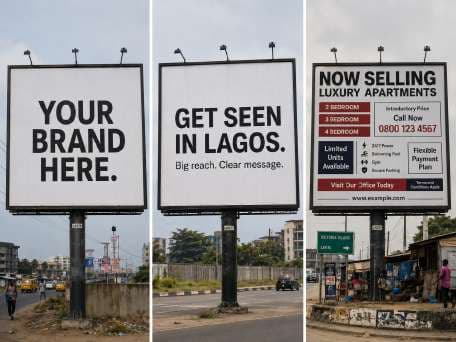
How to Write Billboard Copy People Remember After Five Seconds
Impressions are not outcomes. A practical framework for structuring awareness, consideration and conversion spend so the board sees naira, not vanity metrics.
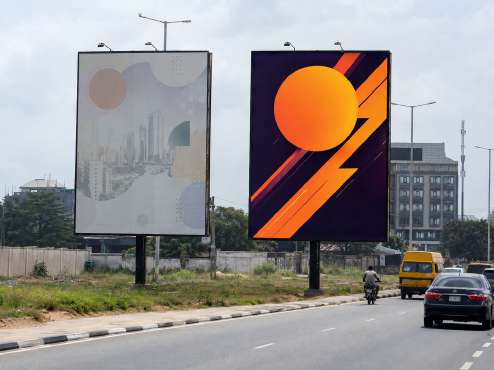
Billboard Design Tips: Make Your Idea Survive the Nigerian Road
A beautifully produced ad for a brand nobody can describe is expensive wallpaper. Sharpen the sentence before you increase the budget.
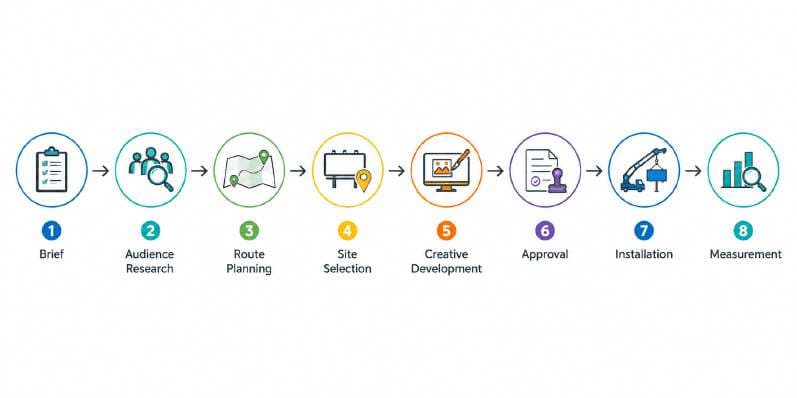
How to Plan a Billboard Campaign From Brief to Measurable Results
A media owner sends over a list of vacant boards. The smarter response is to pause and plan from the business problem first.