
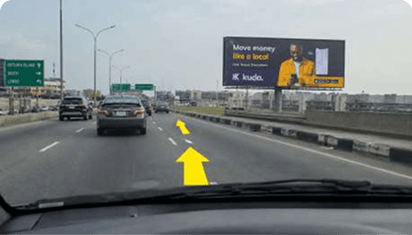
A billboard on a famous Lagos road can look perfect in a media deck. Then you drive past the actual site and discover the problem: traffic approaches from the wrong direction, a tree blocks half the face and the board disappears into a crowd of signs.
The location is popular. The placement is useless.
Learning how to choose a billboard location means looking beyond road names and traffic claims. The right site must put the correct audience in front of the message, give them enough time to understand it and support the action the campaign expects.
A vacant board is not an opportunity simply because it is available. It has to earn its place in the campaign.
Start with the audience, not the available board
Media planning often begins with a spreadsheet of available billboard sites. That may be convenient for booking, but it is the wrong place to begin strategically.
Start with the people the campaign needs to reach.
Where do they live, work or study? Which roads connect those places?
When do they travel? Are they driving, sitting in a bus, walking or waiting at a junction?
What places do they visit before making the purchase your brand cares about?
A campaign targeting senior professionals in Victoria Island and Ikoyi may prioritise routes such as Ozumba Mbadiwe Avenue, Ahmadu Bello Way and the approaches from Third Mainland Bridge. A campaign for students may gain more from repeated visibility near campuses and transport stops than from one prestigious Island placement.
The route matters because audiences do not move through cities randomly. They build routines.
A billboard should fit those routines. It should not be forced into the plan because the media owner has an empty face to sell.
Match the location to the campaign objective
Different campaign objectives need different types of locations. A site that works for national awareness may be poor for directing people to a nearby branch.
Broad awareness
For broad awareness, look for routes with strong audience reach, repeated commuter movement and clear visibility. One high-impact site can create scale and authority. A wider network across Lagos, Abuja, Port Harcourt or other relevant cities can make the campaign feel more present.
The decision depends on whether the brand needs one dominant statement or repeated exposure across several parts of the market.
Local response
A restaurant, clinic, school, hotel, retail store or property development usually needs proximity more than prestige. A board two minutes from the location, with a clear direction and recognisable landmark, may create more useful action than a famous placement several kilometres away. 'Turn right after Allen Avenue' is valuable when the audience is already close. It is meaningless on the other side of Lagos.
Product launch
A product launch may need high-impact sites in places where the target audience already spends time, supported by enough coverage to make the product feel present across the market. For a mass consumer launch, that could mean commuter corridors, shopping districts and busy commercial centres. A premium technology or financial product may focus on airport, business and executive routes.
Event promotion
Event placements should follow likely attendees towards the venue. A concert at Eko Convention Centre may use routes through Victoria Island, Lekki and major approaches to the Island. An event at Landmark Centre may need visibility around Oniru and surrounding entertainment districts. A conference in Abuja may focus on airport, hotel and central business routes.
Timing matters too. The message may begin as an announcement, change into a countdown and later become a final reminder. The billboard should make the event feel closer, both physically and emotionally.
Business-to-business communication
Business-to-business campaigns rarely need the broadest possible audience. A smaller number of well-chosen sites along airport roads, office corridors and commercial districts may reach more decision-makers than a large network of general locations. For B2B communication, relevance beats raw traffic.
The goal is not to appear everywhere. It is to create the impression of strong presence among the people who matter.
Ten thousand suitable viewers can be worth more than one hundred thousand people with no reason to care.
Check traffic direction
A billboard face may be visible to one direction of traffic and almost invisible to the other. This sounds obvious, yet it is one of the easiest mistakes to make when a site is selected from a close-up photograph.
Confirm which direction the face serves. Check whether the audience approaches it from the front, sees it from a difficult side angle or only notices it after passing. Road curves matter. So do lane positions.
A board beside the service lane may look close in photographs but sit too far from vehicles using the main carriageway. A face aimed at people travelling towards the Island may provide little value when the campaign audience mainly travels in the opposite direction.
Ask for photographs taken from the audience's actual approach. Better still, record a short video while moving along the route at a realistic speed.
A board should be assessed from the road, not from where the photographer is standing.
Look at the sightline
A sightline is the clear visual path between the audience and the billboard. A strong sightline allows the board to enter view early, remain visible and give the message time to register. A weak one may be interrupted by trees, bridges, buildings, streetlights, road signs, construction, parked vehicles or other billboards.
Outdoor environments change quickly. A tree that was small when the media deck was created may now cover the logo. A new building may block the far approach. Temporary market structures or campaign banners may surround the site. Road construction can change traffic movement entirely.
This is why old photographs are not enough.
Inspect recent images and visit important sites in person. Check the board from the point where it first becomes visible until the audience passes it.
The best-looking photograph is not the evidence you need. The full approach is.
Consider viewing time
Viewing time is affected by traffic speed, congestion, junctions, pedestrian activity and the board's distance from the road. Slow traffic can create longer dwell time. It can also create impatience, distraction and heavy visual competition. Fast traffic gives the audience less time, which means the message must become simpler.
Ask how vehicles normally behave near the site. Is there a traffic light? Does the road usually slow down during morning or evening movement? Are pedestrians likely to wait nearby? How long does the board remain readable?
Then compare that answer with the proposed creative.
A gantry passed at speed cannot carry the same amount of information as a bus-shelter panel. A board beside a congested junction may support a short direction or offer, but it still cannot become a full brochure.
Location and creative should never be planned in separate rooms.
Assess the angle and orientation
A board can be technically visible and still sit at an angle that makes it difficult to read. The strongest face usually meets the audience's natural line of sight. It becomes visible with enough distance remaining, avoids severe distortion and sits at a height that works with the surrounding structures.
Orientation also affects performance. A tall portrait board may suit one dominant product or person. A wide landscape board may handle a horizontal headline or broader visual scene better.
The idea should fit the shape rather than being squeezed into whatever format is available.
A dramatic side angle may look impressive in a site photograph. From moving traffic, it may give the audience only a narrow, distorted view.
Never confuse an interesting structure with an effective placement.
For a clearer comparison of how formats behave, read about the types of billboards in Nigeria.
Study the surrounding clutter
Billboards compete with buildings, road signs, shopfronts, vehicles, street activity and other advertisements. A busy environment is not automatically a bad one. The question is whether the board has enough scale, contrast or physical separation to remain noticeable.
Look at how many advertisements are visible at the same time. Check whether nearby brands use similar colours and whether the board blends into the building behind it.
Night-time clutter matters too. Bright shop signs, streetlights and nearby LED screens may overpower a static face that appears perfectly clear during the day.
Sometimes the strongest site is not the loudest one. It is the one with enough room for the message to breathe.
A brand does not win attention by joining a shouting match it cannot dominate.
Check day and night visibility
A billboard can become a different media asset after dark. Confirm whether the structure is illuminated, how the lighting works and whether all lamps are functioning. For digital screens, check operating hours, brightness, display quality and whether power interruptions affect performance.
Glare can make a screen difficult to read. Poor front lighting can leave parts of a static board in shadow. Nearby lights may change how the campaign colours appear.
The audience may also change by time of day.
A route carrying office workers in the morning may attract entertainment traffic at night. A location that looks active during daylight may become almost empty after business hours.
Ask for daytime and night-time photographs. Visit the site during the hours that matter most to the campaign.
Do not pay for twenty-four-hour visibility when the board only works for twelve.
Think about frequency, not only traffic
A high traffic figure can sound impressive, but it does not explain who is passing or how often the same people return. A commuter route may reach fewer unique people than a major transport corridor, yet expose the target audience to the message several times each week.
That repetition can build familiarity.
For a long-term awareness campaign, frequency may matter more than reaching the largest possible number of one-time passers-by. For an event or short product launch, broader reach across several relevant areas may be more useful.
Reach and frequency should be judged together.
Do not compare sites using one large number. Ask who is passing, how often they use the road and whether the billboard is positioned well enough to be noticed repeatedly.
Look at proximity and context
A billboard becomes more meaningful when its surroundings support the message. A food brand near a shopping or dining district feels relevant. A financial service along a business corridor meets people in the right frame of mind.
A property board close to the development can move someone from awareness to inspection.
The same principle works for airport travel campaigns, retail directions, campus products and event promotion.
Context can even strengthen the creative idea.
A traffic-related message may hit harder on a congested road. A travel brand can speak directly to people approaching the airport. An event campaign can build excitement as attendees move closer to the venue.
But context can also expose a poor choice. A luxury property campaign placed far from any relevant audience or development may feel disconnected, regardless of how impressive the board looks.
A good location does not merely carry the message. It gives the message a reason to exist there.
Verify the board and the practitioner
Do not book a site using only a forwarded photograph and a promise that it is available. In Lagos, LASAA's official directory is intended to help users check approved practitioners and licensed billboard locations. Confirm the asset owner, proposed face and the structural approval status.
Check that it is available for the full campaign period and in good physical condition.
For static boards, confirm production and installation responsibilities. For digital displays, verify operating hours, display duration and proof-of-play reporting.
The agreement should also state who will monitor the campaign and how proof of posting will be supplied.
A perfect location on an unverified structure is not a clever media buy. It is an avoidable risk.
The wider compliance process is covered in our guide to billboard advertising regulations in Nigeria.
Ask for evidence, not adjectives
Media decks often describe sites as ‘premium’, ‘strategic’, ‘iconic’ or ‘high traffic’. Those words are sales language, not proof.
Before approving a location, request:
• Recent approach photographs
• Map coordinates
• Traffic direction
• A clear audience description
• Available traffic or audience data
• Exact board dimensions and orientation
• Daytime and night-time visibility information
• Digital loop details, where relevant
• Nearby landmarks
• Evidence that the site is approved
• Photographs from previous installations
Past installation photographs can reveal how the structure handles real creative, not just an empty mock-up.
The goal is not to distrust every media owner. It is to make the decision using information that can be checked.
“Premium” should be the conclusion after assessment, not the starting assumption.
Visit the site with the creative in mind
A site inspection becomes more useful when the team brings a draft creative or simple mock-up. Look at the design from the far approach. Check whether the headline remains readable, the logo is clear and the main visual is large enough.
Notice what happens to the background colour. Does it disappear into nearby buildings or trees? Does the call to action make sense for someone moving at that speed? Is there enough time to understand the idea?
A creative that works on one site may fail on another.
The same pale background may feel clean against a dark building and vanish against a bright sky. A long headline may survive slow traffic in Ikeja and become unreadable on Abuja Airport Road.
A billboard location and its creative form one system. Assessing them separately is how expensive surprises happen.
One site or a network?
One high-impact site may be right when the campaign needs prestige, dominance or strong presence around a specific location. A network can be better when the objective is citywide coverage, neighbourhood penetration or repeated exposure.
Several sites can also carry a sequential story. One board introduces the question, another develops the thought and the final placement reveals the brand or action.
But more pins on a map do not automatically create a stronger plan.
Ten weak placements are still weak placements. Every site should have a role, whether that role is reach, frequency, direction, prestige or proximity.
Read how to plan a billboard campaign for the full workflow connecting objectives, locations, creative and execution.
A billboard location scorecard
When several sites look suitable, score each one from one to five using our standard scorecard criteria:
Audience fit
Route relevance
Sightline
Viewing time
Approach angle
Daytime visibility
Night-time visibility
Visual clutter
Proximity and context
Likely frequency
Approval confidence
Physical condition
Measurement potential
Add comments, recent photographs and any concerns beside each score.
Do not rely only on the final total. A site with excellent visibility but poor audience fit should not beat a slightly less dramatic location that reaches the right people repeatedly.
The scorecard exists to make the reasoning visible. It prevents personal preference, famous road names and media-owner pressure from deciding the campaign.
Red flags to watch for
Be careful when assessing proposal lists that feature any of these common warning signs:
Only close-up photographs are available
The traffic direction is unclear
The board is partly blocked
Night-time lighting cannot be demonstrated
The stated dimensions keep changing
Approval status is vague
No recent evidence supports immediate availability
The audience description could apply to almost anyone
The site is famous but unrelated to the target market
No installation or monitoring process is provided
One red flag may have a reasonable explanation. Several usually mean the site needs more investigation.
Do not let campaign deadlines turn weak evidence into confidence.
Final thought
A good billboard location is where audience movement, viewing conditions, creative and campaign objectives meet.
Start with the people you need to reach. Map their routines. Inspect the actual face and judge its sightline, angle, dwell time, context, lighting and approval status.
Xpark360 helps brands compare suitable billboard locations and build campaigns around audience movement, not whatever space happens to be open.
Then decide whether the location deserves the message.
Once the campaign is live, use our guide to measuring billboard advertising effectiveness to judge whether the chosen sites delivered more than attractive installation photographs.
Before you pay for a board, let Xpark360's billboard advertising service put the route, face and viewing conditions under proper scrutiny.
Keep Reading
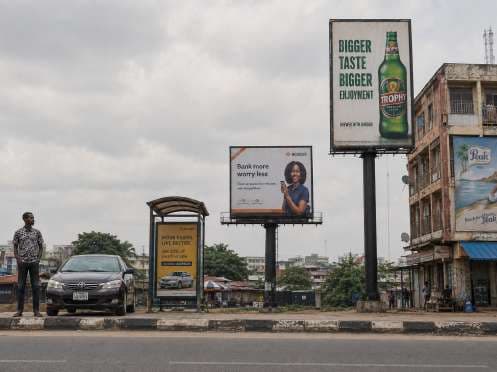
Billboard Sizes in Nigeria: Why Bigger Is Not Always Better
Billboard sizes in Nigeria should never be judged by scale alone. The useful question is which size gives this message the best chance of being noticed.
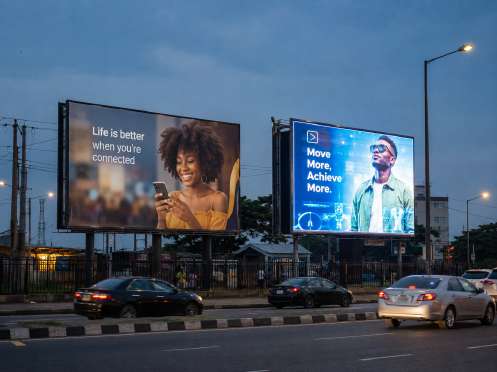
Static vs Digital Billboards: Which One Will Work Harder for Your Campaign?
The static vs digital decision should come down to what the campaign needs, not which format looks more modern in a presentation.
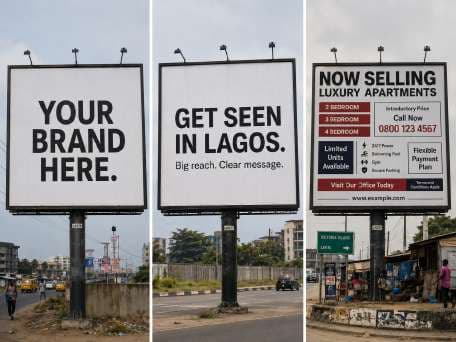
How to Write Billboard Copy People Remember After Five Seconds
Impressions are not outcomes. A practical framework for structuring awareness, consideration and conversion spend so the board sees naira, not vanity metrics.