
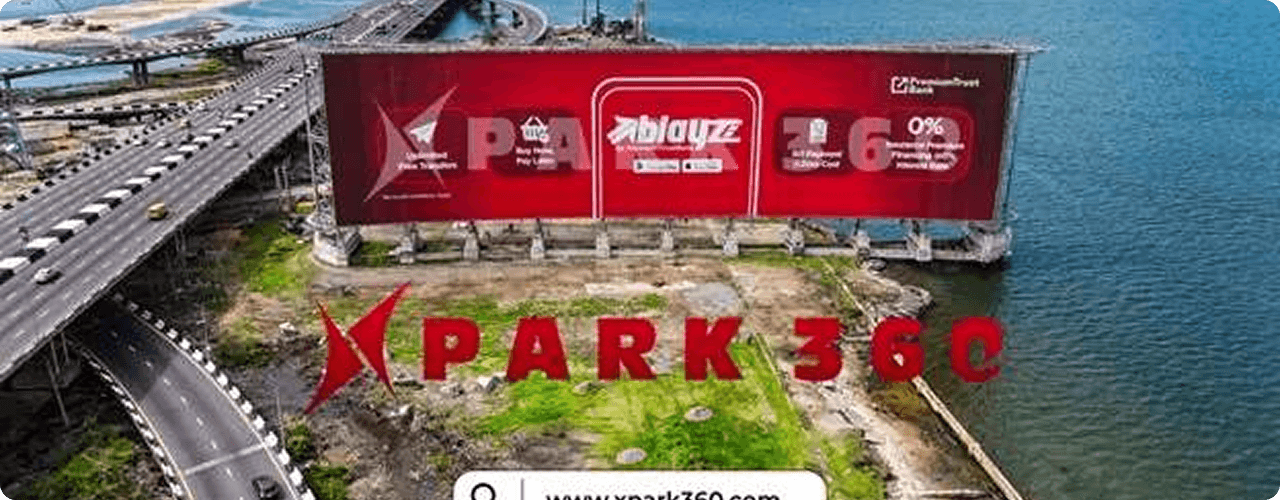
At 7:45 on a weekday morning, traffic is already building across Third Mainland Bridge, Lekki-Epe Expressway and major roads in Abuja, Port Harcourt and Ibadan. Thousands of people are moving through familiar routes, looking ahead, checking their surroundings and passing the same landmarks they saw yesterday.
This is where billboard advertising in Nigeria earns its place. It puts a brand inside the audience's daily movement, not behind another tab, login or scroll.
But size alone does not create attention. A billboard can dominate the road and still say nothing. The wrong location, an overloaded message, poor contrast or weak planning can turn an expensive media placement into background decoration.
This guide explains what billboards do well, the formats available, how to judge a location, what strong outdoor creative looks like, how approvals work and how to measure whether the campaign achieved anything beyond being seen.
What is billboard advertising?
Billboard advertising is a form of out-of-home advertising that places a brand message on a large physical or digital display in a public environment. The classic roadside board is only one version. The category also includes LED screens, unipoles, gantries, wall drapes, bridge panels and smaller street-level displays.
Its advantage is simple. People do not need to follow the brand, search for it or open an app before seeing the message. The brand enters a route they already use.
That makes billboards effective for building broad awareness, introducing new products, announcing events, reaching people around a specific location and giving digital-first businesses a stronger physical presence. They can also reinforce television, radio, social media and experiential campaigns.
Still, a billboard is not a website enlarged to twenty feet. It does not need your full product story, five benefits, three phone numbers and every social media handle. It needs one idea strong enough to survive distance, movement and distraction.
Why billboard advertising still works in Nigeria
Nigeria’s cities run on movement. People commute between the Mainland and Island, travel through commercial districts, sit in traffic around busy junctions, pass markets, airports, estates and office clusters, then repeat those journeys throughout the week.
Repeated exposure builds familiarity. Someone may first see a campaign along Mobolaji Bank Anthony Way, meet it again on Instagram, hear the same line on radio and later search for the brand. By that point, the name no longer feels new.
That familiarity matters in a market where people are constantly deciding which new products, platforms and businesses deserve their attention.
Billboards also create a sense of scale. A strong placement can make a brand feel active, established and present in the market. But no brand should mistake size for strategy. A massive board on a famous road will not rescue an irrelevant audience or a forgettable message.
The real strength of outdoor advertising is its ability to place one clear thought inside the physical routine of the right people.
When should a brand use billboard advertising?
A billboard makes sense when the campaign objective matches the strengths of the medium.
It can be a strong choice when a product needs fast public visibility, a business is opening in a specific area, an event needs attention along routes leading to the venue or a national campaign needs a physical presence in major cities.
It can also help a digital-first business look less distant. Seeing an app, fintech platform or online service on a major road can give it a level of physical credibility that another social media post may not create.
Retail, property, hospitality and service businesses can use billboards to guide people towards nearby locations. A restaurant opening in Ikeja may value clear direction and proximity more than a prestigious board several kilometres away. An event at Eko Convention Centre may focus on routes used by guests approaching Victoria Island. A national consumer brand may prioritise repeated coverage across several cities.
Billboards become a poor starting point when the message needs several minutes of explanation, the audience cannot be connected to identifiable locations or the only objective is to "be outside". Being outside is not a campaign objective.
The idea must also be strong enough to land quickly. When a campaign needs the audience to read a paragraph before understanding it, the road is the wrong place for that conversation.
The main types of billboards in Nigeria
Media owners sometimes use different names for similar structures. Before approving any site, confirm its exact dimensions, orientation, lighting, display conditions and approach direction. Never plan from the format name alone.
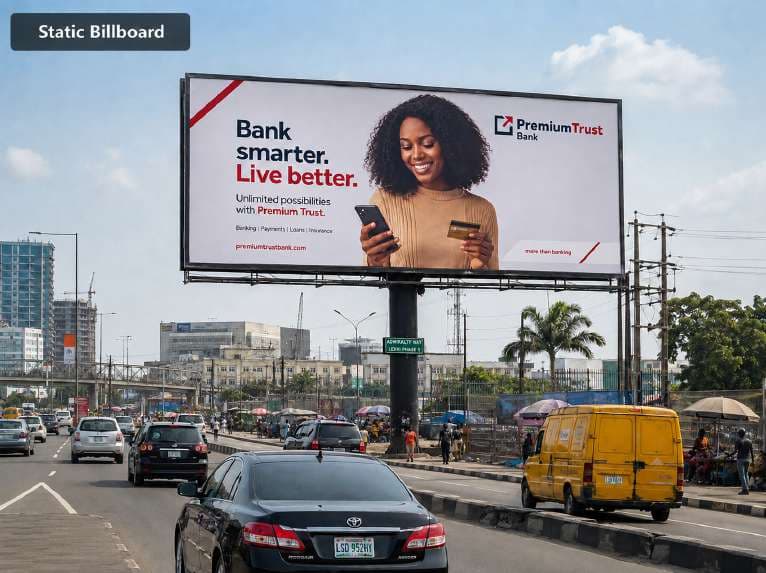
Static printed billboards
A static billboard uses printed material fixed to a board for the agreed campaign period. One message remains visible throughout, giving the advertiser consistent presence on that face. Static boards suit long-running awareness campaigns, strong brand statements and simple directional messages. They also work when the creative idea does not need to change frequently. Static should never be mistaken for dull. A bold cut-out, an extension beyond the frame, smart lighting or an idea that uses the physical structure can attract more attention than a screen filled with unnecessary movement.

Digital or LED billboards
Digital billboards display artwork on an electronic screen, usually in rotation with other advertisers. The creative can be changed without producing and installing a new printed skin. This makes digital useful for countdowns, product variations, changing offers, event reminders and messages linked to a particular time of day. A food brand might run a breakfast message in the morning and switch to dinner later. An entertainment campaign can count down to a release or event.
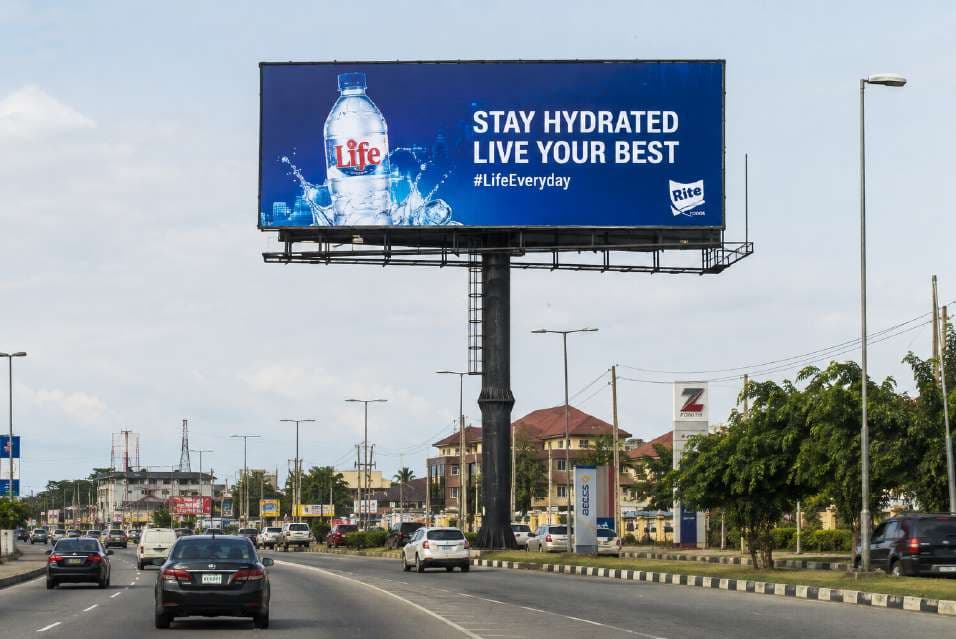
Unipole billboards
A unipole is a large board supported by a single tall column. Its height can improve long-distance visibility and help the creative rise above roadside clutter. Unipoles work well on major corridors where the audience approaches from a distance. They suit large product visuals, short headlines and confident brand statements. The height changes how the design behaves. Details that look generous on a laptop can disappear once the board is several metres above the road. Design for the real viewing condition, not the presentation screen.
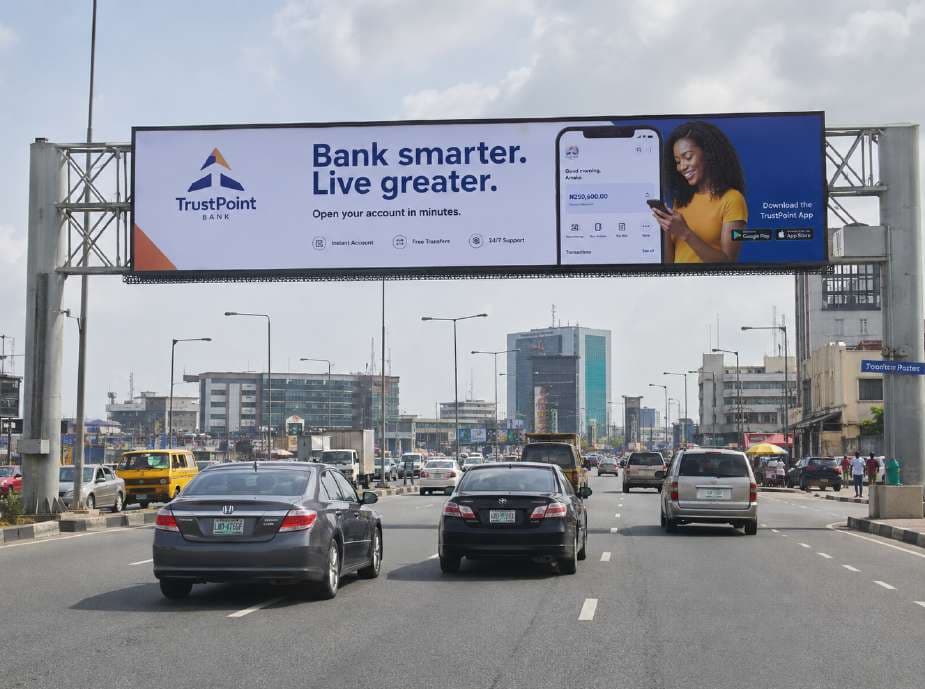
Gantry billboards
Gantries sit above or across a road, placing the message directly within the audience's line of travel. They can create strong visibility on busy routes, especially for major launches, simple awareness messages and campaigns aimed at motorists and passengers. A gantry is no place for timid copy. The audience is moving, the viewing window is short and the message has to compete with the road itself. Use a direct headline, an unmistakable visual and clear brand identification.
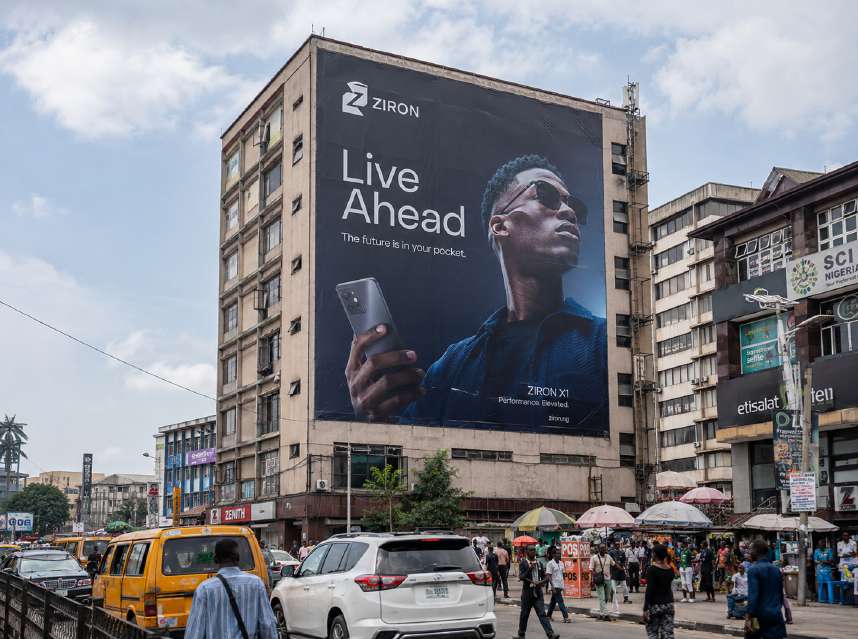
Wall drapes and wallscapes
Wall drapes and wallscapes use the side of a building as a large advertising surface. Their scale can turn an ordinary structure into a branded landmark. They are particularly useful for product launches, entertainment, fashion, technology and campaigns built around a dramatic visual idea. The building should influence the creative from the beginning. Windows, corners, surrounding structures and the shape of the wall all matter. Designing a perfect rectangle and forcing it onto an awkward building usually produces an awkward result.
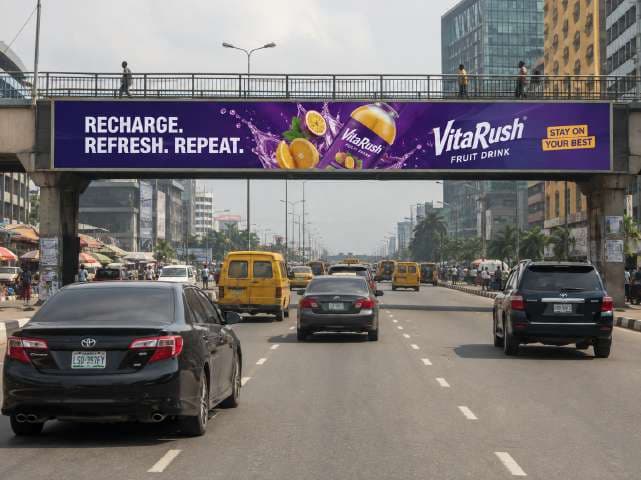
Bridge panels
Bridge panels place advertisements across the face or sides of pedestrian and road bridges. They can build repeated exposure along commuter routes and work well for short, horizontal messages. Their proportions are often narrow, so wide typography, strong contrast and disciplined layouts matter. The creative must fit the structure. Shrinking a standard billboard design until it fits is not adaptation.
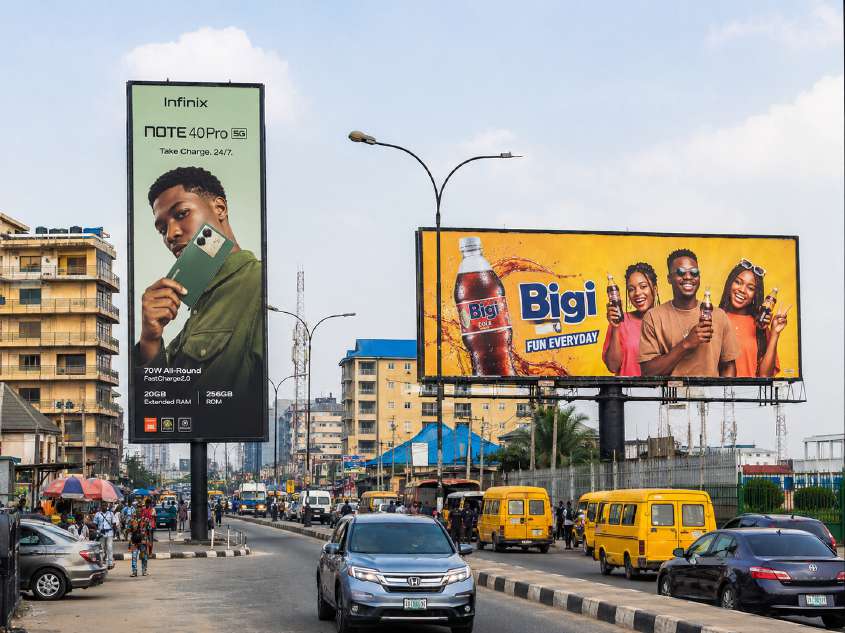
Portrait and landscape billboards
Orientation affects how people read the message. Portrait boards favour vertical layouts, single products, people, pack shots and strong top-to-bottom hierarchy. Landscape boards work well with wider scenes and horizontal headlines, but the extra width often tempts brands to add more than the audience can process. Neither orientation is automatically better. The right one is the shape that helps the idea land fastest.
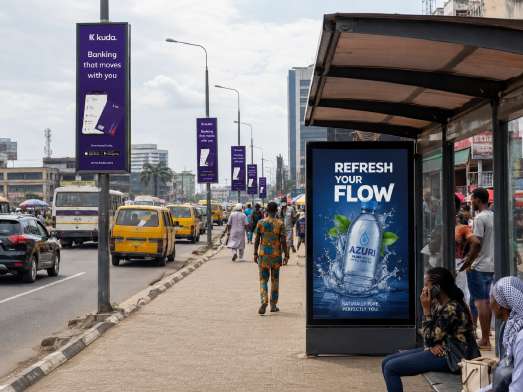
Street-level bus shelters
Bus shelters, lamp-post panels and other smaller displays are usually seen from a closer distance than highway billboards. Some viewers may also have longer dwell time while waiting, walking or sitting in slow traffic. These formats can support neighbourhood campaigns, retail promotion and repeated coverage along selected roads. They may carry slightly more detail than a fast-road billboard, but the message still needs a clear hierarchy. A full comparison is covered in our guide to the types of billboards in Nigeria.
How a billboard campaign works
A successful billboard campaign is planned before anyone starts designing.
1
Set the objective
"Create awareness" is too broad to guide a serious campaign. Awareness of what? Among which people? In what area? During which period? What should they remember after passing the board? A more useful objective might be: "Make the new service familiar among professionals travelling between the Lagos Mainland and Victoria Island before the launch event." The clearer the objective, the easier it becomes to choose the right route, format, message and measurement method.
2
Define the target audience
Identify who the campaign needs to reach, where they live or work, the areas they visit and when they are likely to move. This prevents the team from selecting a famous location simply because everyone recognises its name. A well-known road filled with the wrong audience is still the wrong road.
3
Choose the formats and sites
The format should fit the message. The location should fit the audience. Review the direction of traffic, viewing distance, speed, likely dwell time, lighting, surrounding clutter, nearby landmarks and the physical condition of the structure. A board facing morning traffic may perform very differently from the opposite face seen mostly during the evening journey home.
4
Develop the creative
The copywriter and designer should work together from the start. Outdoor advertising punishes disconnected thinking. The message needs one clear job. The visual hierarchy must tell the viewer what to notice first, second and last. The contrast must hold up against sunlight, rain, roadside clutter and long viewing distances. A billboard should be judged at the size and distance at which the audience will see it. Looking attractive on a laptop is not enough.
5
Complete regulatory approvals
The advertisement and the physical display do not fall under exactly the same approval process. ARCON handles advertising standards and pre-exposure clearance, while relevant state or local outdoor authorities regulate structures, locations and permits. In Lagos, LASAA regulates outdoor advertising and signage. Approval should be treated as part of campaign planning, not an obstacle to remember after production has started.
6
Produce and install
Static artwork must be supplied using the correct dimensions, material and production specifications. Digital files must match the screen's pixel dimensions, colour requirements, duration and safe zones. The final installation should be documented with clear photographs showing the full board, surrounding environment and approach view.
7
Monitor the live campaign
The campaign is not finished when the board goes up. Check whether the display is visible, properly lit and free from damage or obstruction. For digital screens, confirm that the creative is playing at the agreed frequency and duration. The installed artwork must also match the approved version. A board that is partly hidden by a tree or dark at night is not delivering what the media plan promised.
8
Measure and learn
Compare the campaign results with the original objective and the performance recorded before launch. Depending on the goal, this may include estimated impressions, branded searches, direct website traffic, enquiries, store visits, event registrations, sales movement or brand-recall research. Measurement should not be invented after the campaign ends. Decide what success looks like while there is still time to track it.
How to choose the right billboard location
“Busy” is not a strategy. A road can carry thousands of people and still be useless to a particular brand. A valuable site puts the right audience in front of the right message under the right viewing conditions. That means looking beyond traffic volume.
Consider who uses the route, the direction from which they approach, how fast they are moving, how early the board becomes visible and what other signs compete for attention. Check whether the board is clear during the day and properly lit at night. Nearby offices, estates, shops, event venues and transport points may also affect its relevance.
A premium business service may prefer a route used by executives and business owners over a more crowded road with little connection to its audience. A neighbourhood supermarket may gain more from a smaller board two minutes from its location than a large placement on the other side of Lagos.
Always inspect the location or request recent photographs taken from the audience's actual approach. Media decks become outdated. Trees grow, buildings rise, lights stop working and new structures block old sightlines.
The full checklist is in our guide to choosing the right billboard location.
What makes billboard creative and effective?
A billboard may have only a few seconds to make sense. That makes discipline more valuable than decoration.
Strong billboard creative has one main message, a short readable headline, an image that supports the idea, clear brand identification and enough contrast to remain visible from the road.
Type should be large and uncomplicated. The layout should be designed for the exact board rather than resized from a social media post. Where a response is required, the next step must be realistic for the viewing environment.
There is no universal word limit. A pedestrian-facing panel at a bus stop can carry more information than a gantry above a fast road. The audience's speed, distance and dwell time should decide how much copy is possible. Still, shorter is usually safer. Every extra word asks for more attention, and the road is not known for generosity.
Avoid long website addresses, several phone numbers, multiple logos and tiny disclaimers. QR codes can work in places where people are stationary or moving slowly. Asking drivers on an expressway to scan one is wishful thinking dressed as media planning. The best billboard ideas do not fight the medium. They use its size, setting and speed to make the message harder to forget.
How long should a billboard campaign run?
There is no fixed number of weeks that works for every billboard campaign. An event or launch may need a concentrated burst before a specific date. A brand-awareness campaign may require a longer period so the same commuters meet the message repeatedly. A directional board close to a permanent store, hotel or office can remain useful for much longer.
Before choosing a duration, consider how often the target audience uses the route, whether the message is time-sensitive and how many exposures may be needed before it becomes familiar. The number of sites and support from radio, digital, television or activations will also affect the campaign's reach. Measurement timing matters too. A campaign should run long enough to create meaningful repetition and give the brand enough data to judge its effect. But permanence has a limit. Leave the same message up for too long and people stop seeing an advertisement. They start seeing part of the road.
Billboard advertising regulations in Nigeria
Billboard advertising involves both the message being exposed and the physical structure carrying it.
ARCON is Nigeria’s advertising regulator and requires pre-exposure clearance for advertisements within its vetting categories. Its published procedure states that advertisments under vetting should not be exposed without a Certificate of Approval. Outdoor structures and permits are also regulated by relevant state or local authorities. In Lagos, LASAA regulates outdoor advertising and signage, manages permits and conducts compliance inspections. Its official directory can be used to check approved practitioners and billboard locations.
Work with an experienced, properly authorised advertising or outdoor partner.
Confirm that the structure and site are approved for use. Prepare the creative with all claims, disclaimers and sector requirements considered.
Submit the material for the required vetting and obtain written approval before exposure. Keep copies of approvals and final artwork. Check whether fresh clearance is required before changing an approved claim, offer or visual.
How to measure whether a billboard worked
Billboard measurement should begin before the campaign launches. First, define what success means for that specific job. A brand-awareness campaign should not be judged only by immediate sales. A directional retail board should not be judged mainly by social media mentions.
Exposure data can estimate impressions, reach and frequency. Brand-recall surveys can show whether people remember the message. Search and website data can reveal changes in branded searches, direct traffic and visits from exposed locations. Response-led campaigns can use dedicated phone numbers, short web addresses, trackable landing pages or QR codes where the viewing environment allows people to scan safely. Retail and event campaigns may also track footfall, registrations, enquiries and sales movement. Where possible, compare exposed locations with areas where the campaign did not run. User-generated photographs and social conversation may provide supporting evidence, especially when the creative itself becomes part of public discussion. No single number proves that a billboard worked. The clearest evaluation combines exposure, audience behaviour and business results.
Common reasons billboard campaigns fail
Billboards usually fail because of poor decisions, not because the medium has stopped working. Some brands choose a site because it is famous rather than relevant. Others try to explain an entire business on one board, bury the headline under several product claims or use a visual hierarchy that only makes sense when viewed up close.
A design can look impressive in a presentation and collapse completely at road distance. The type becomes too small, the logo disappears, and the call to action takes too long to remember. Campaigns also suffer when nobody inspects the live installation, checks the lighting or confirms that a digital board is playing as agreed. Treating outdoor as separate from the wider campaign weakens the message further. Then there are brands that launch without baseline data, tracking methods or a definition of success. When the campaign ends, the only report available is a folder of photographs proving that the board existed. Using an unverified site or exposing unapproved creative creates an entirely different set of problems. Compliance should never depend on luck.
How billboards support digital, radio, TV and activations
Billboards often work harder when they are part of a connected campaign. Someone may see a headline in traffic, hear the same campaign thought during a radio drive-time show, watch the full film online and meet the brand at an activation. Each encounter gives the next one more meaning.
Outdoor can make a digital advertisement feel familiar before it appears on the audience's phone. It can give a radio campaign a recognisable visual identity and extend a television campaign into everyday travel. It can also direct people towards an event, create photographs that travel on social media and make the brand name easier to remember when people eventually search for it. The core idea should remain consistent, but each medium needs its own execution. Copy written for a radio script should not be pasted onto a billboard. A television storyboard should not be squeezed into one outdoor frame. Campaign consistency does not mean repeating the same artwork everywhere. It means making every channel feel like part of the same thought.
A practical billboard campaign checklist
Before approving the campaign, confirm that:
The objective is clear.
The target audience and routes are defined.
The site has been inspected or recently verified.
The board's orientation and dimensions are confirmed.
The copy is readable within the real viewing time.
The visual hierarchy works from a distance.
The call to action is realistic.
Required creative and site approvals are complete.
The final artwork matches the approved version.
Installation proof will be supplied.
Monitoring responsibilities are clear.
Baseline data and campaign KPIs are recorded.
The billboard connects naturally to the wider campaign.
Ready to plan a billboard campaign?
Done properly, billboard advertising in Nigeria is more than renting a large rectangle beside the road. It is a system connecting audience movement, location, format, creative, compliance and measurement.
Xpark360 helps brands select suitable billboard formats and locations, manage the campaign process and connect outdoor advertising to the wider marketing plan.
Explore Xpark360’s billboard advertising service and start with the question that decides everything: who needs to see you, and where are they already looking?
Keep Reading
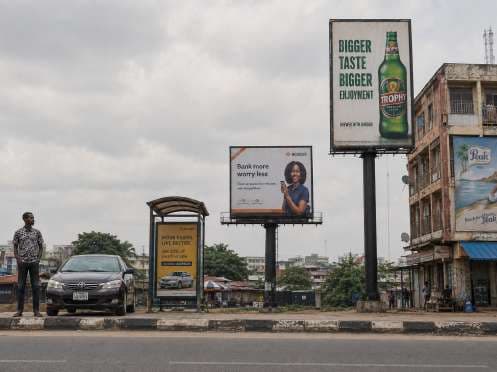
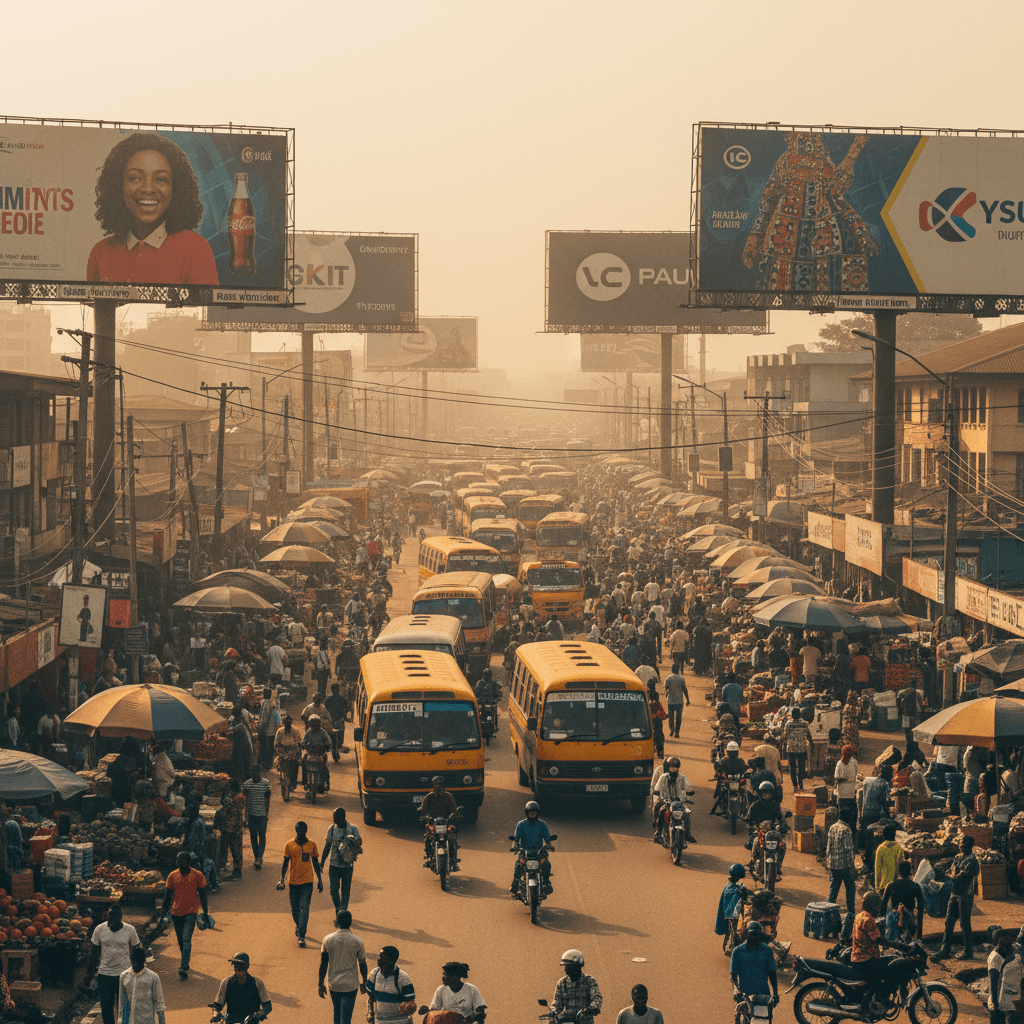
Billboard Sizes in Nigeria: Why Bigger Is Not Always Better
Billboard sizes in Nigeria should never be judged by scale alone. The useful question is which size gives this message the best chance of being noticed.
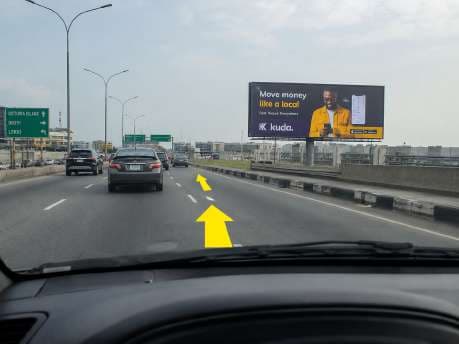
How to Choose a Billboard Location That Actually Reaches the Right People
The right site must put the correct audience in front of the message, give them enough time to understand it and support the action the campaign expects.
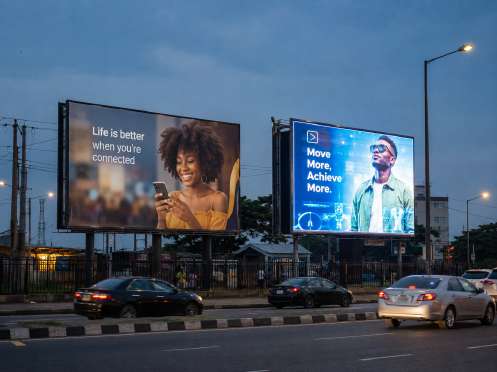
Static vs Digital Billboards: Which One Will Work Harder for Your Campaign?
The static vs digital decision should come down to what the campaign needs, not which format looks more modern in a presentation.